
Spectra
moonlight-sheaf × moonlight-linalg
Two spaces from the Triangulation engine become base spaces for a sheaf. Its Laplacians are assembled from the coboundaries δ⁰, δ¹ and handed to the Krylov solver as one self-adjoint operator — everything below is that spectrum, drawn by the run itself.
243 vertices, 678 edges, 436 faces — χ = 1. Meshed by the Triangulation engine

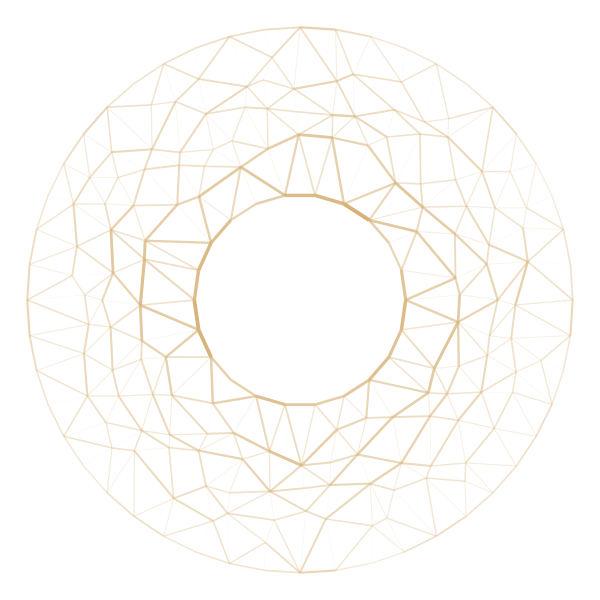
205 vertices, 545 edges, 340 faces — χ = 0. Two constraint rings, interior by barrier parity: the hole is certified before any spectrum runs

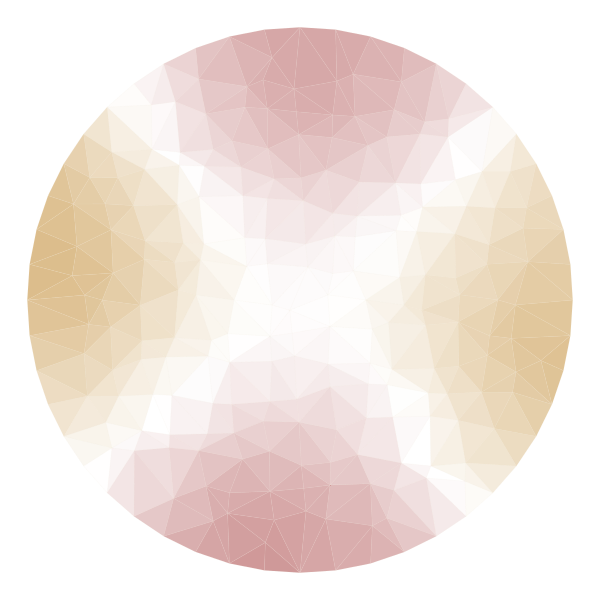
First movement: the smallest eigenvectors of L⁰ are the shapes the space can ring in. Gold is positive, rose negative; the dark seams are nodal lines — where the mode is silent.
first dipole — one nodal line
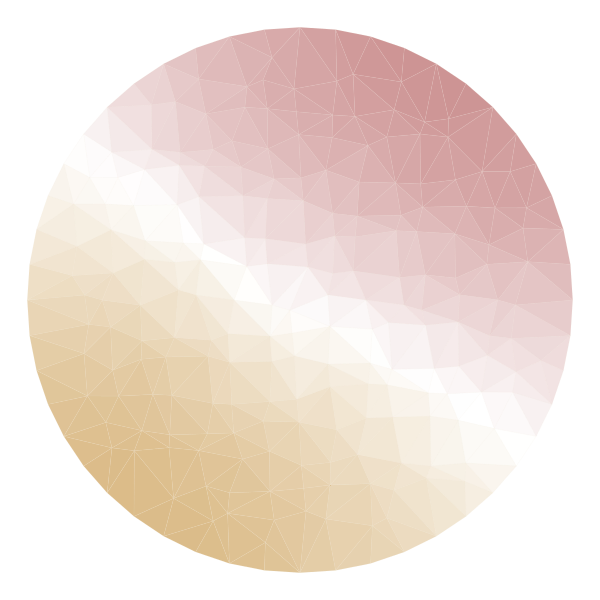
its near-degenerate twin, nodal line rotated
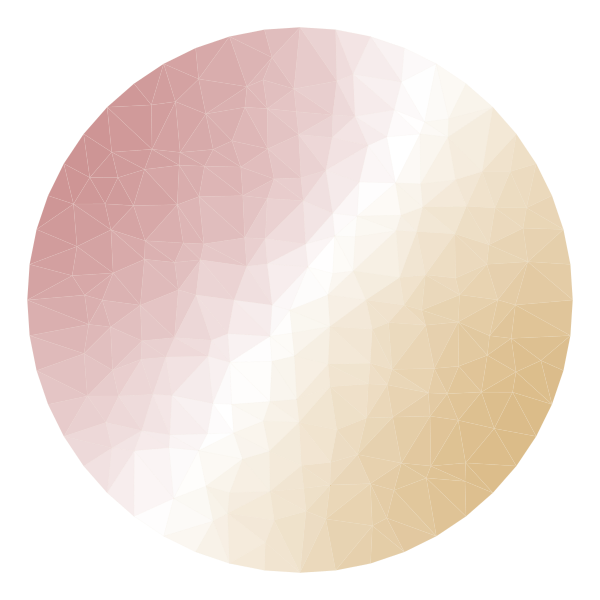
quadrupole — the nodal cross
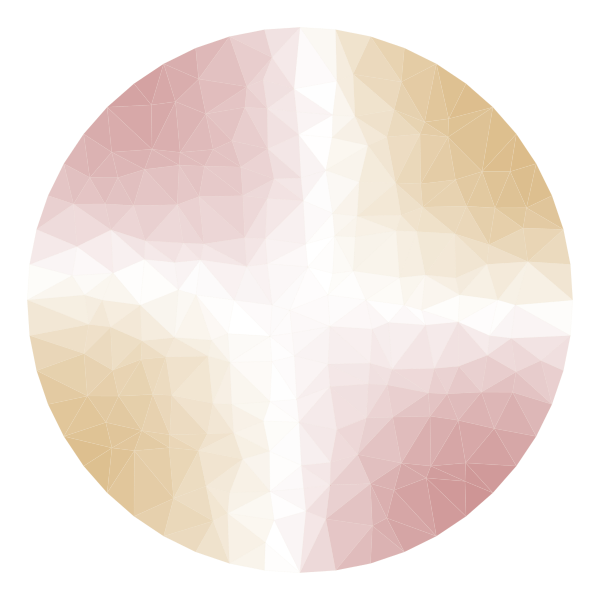
the crossed quadrupole, axes turned
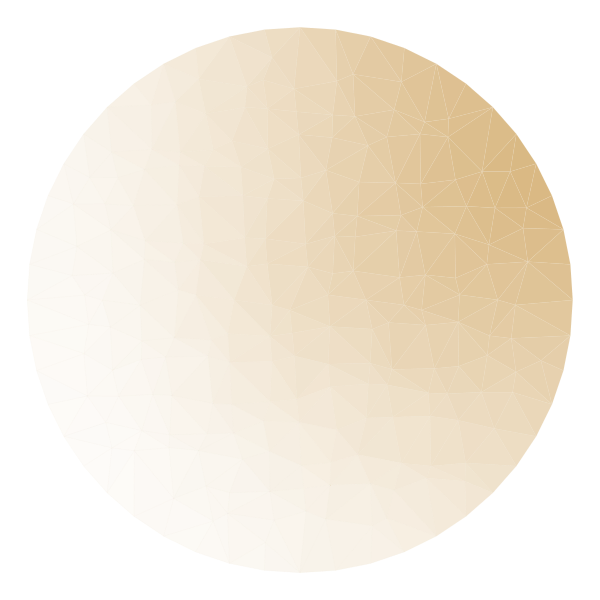
Second movement: the same operator, run forward — the packed sheaf Laplacian stepping a spike toward agreement, τ = 0.9 / λ_max with λ_max = 10.22 taken from the far end of the spectrum.
a unit spike at one vertex
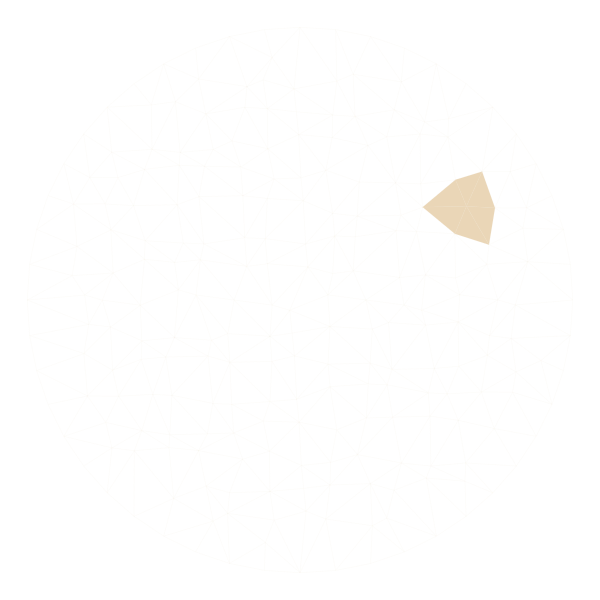
three steps of x ← x − τLx
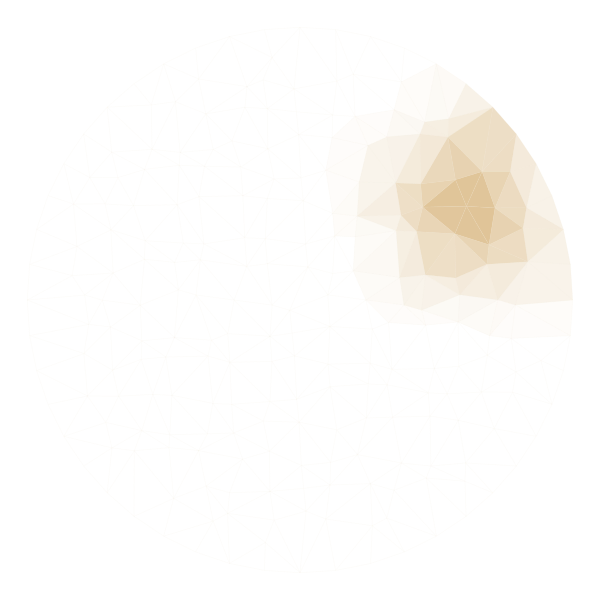
the spike forgets where it began
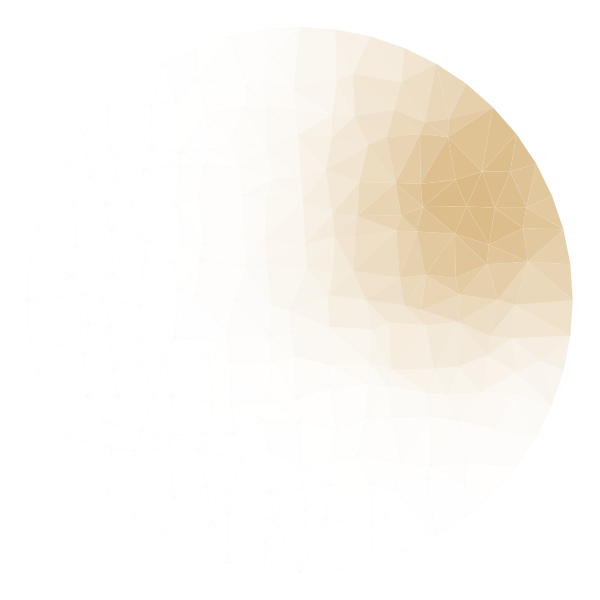
equilibrium — the constant section, λ₁’s eigenvector
Third movement: on the annulus, L¹ has a kernel — one harmonic 1-form, drawn edge by edge, circulating the void it proves. The disc's L¹ refuses: its smallest eigenvalue is 0.021, and no such picture exists for it.
the eigenvector at λ ≈ −7.8e−10 — cohomology, visible