


The Constant
layer ladder → the crossing, 2026-08-07
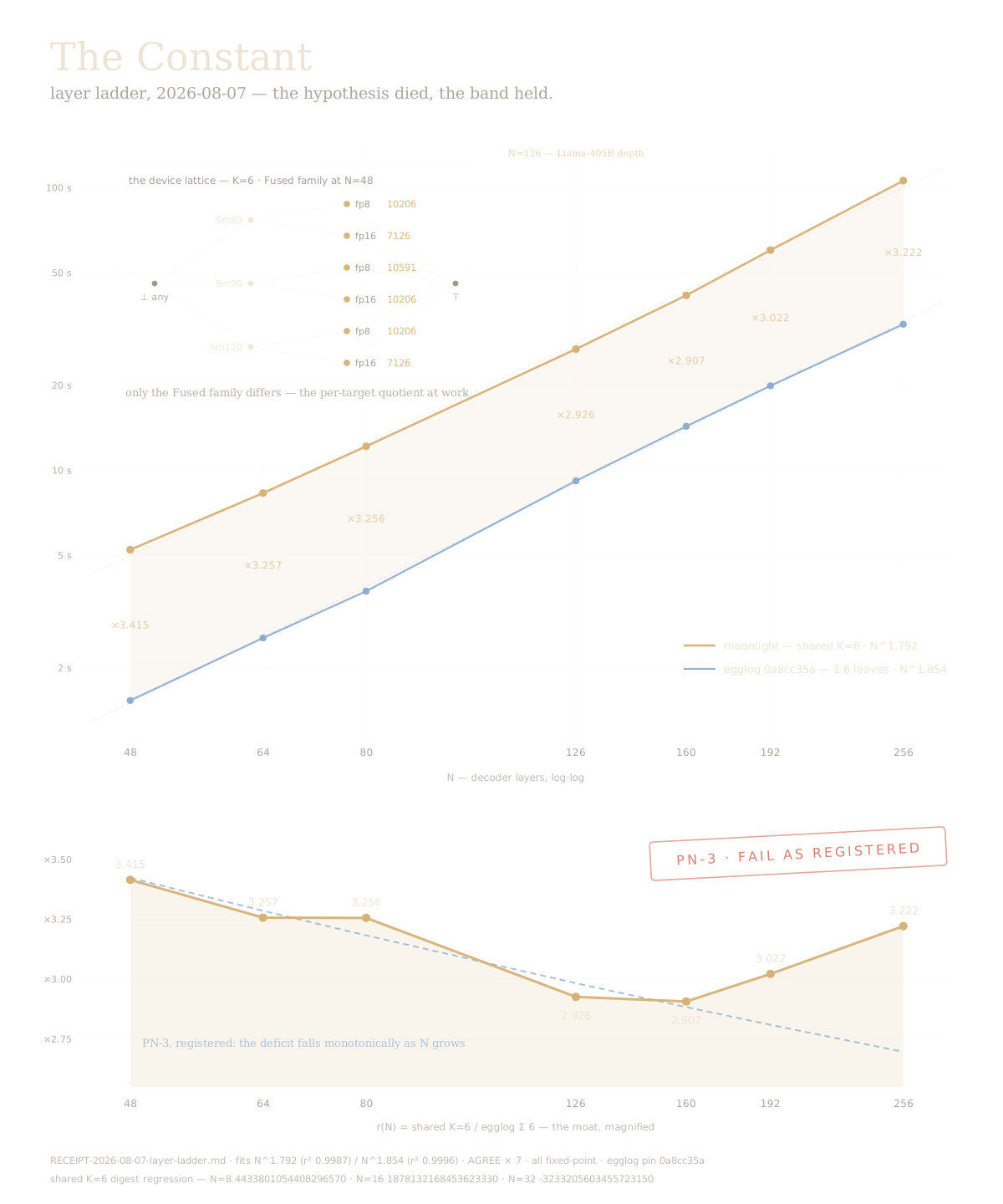
One night, one machine, seven rungs of decoder depth. The gold curve is our engine saturating all six device contexts at once; the slate curve is egglog at Luminal's pin, six single-context runs summed, scored by its most generous number. Both are superlinear, and the space between them was the subject: a flat ~3× band that a hypothesis registered before the run said should close as N grew. It didn't close — not that night. The band held against that instrument, and the hypothesis is stamped where it died.
Drawn by the driver from the receipt — every mark is a datum. The dashed ghost is PN-3 exactly as registered, a power fit of the falling rungs; it tracks the measured band to N=160 and then peels away while reality turns upward. The inset is the fixture's device lattice, all eleven contexts, each leaf carrying its Fused-family population at N=48. The driver recomputes both fits and refuses to emit unless they reproduce the receipted exponents.
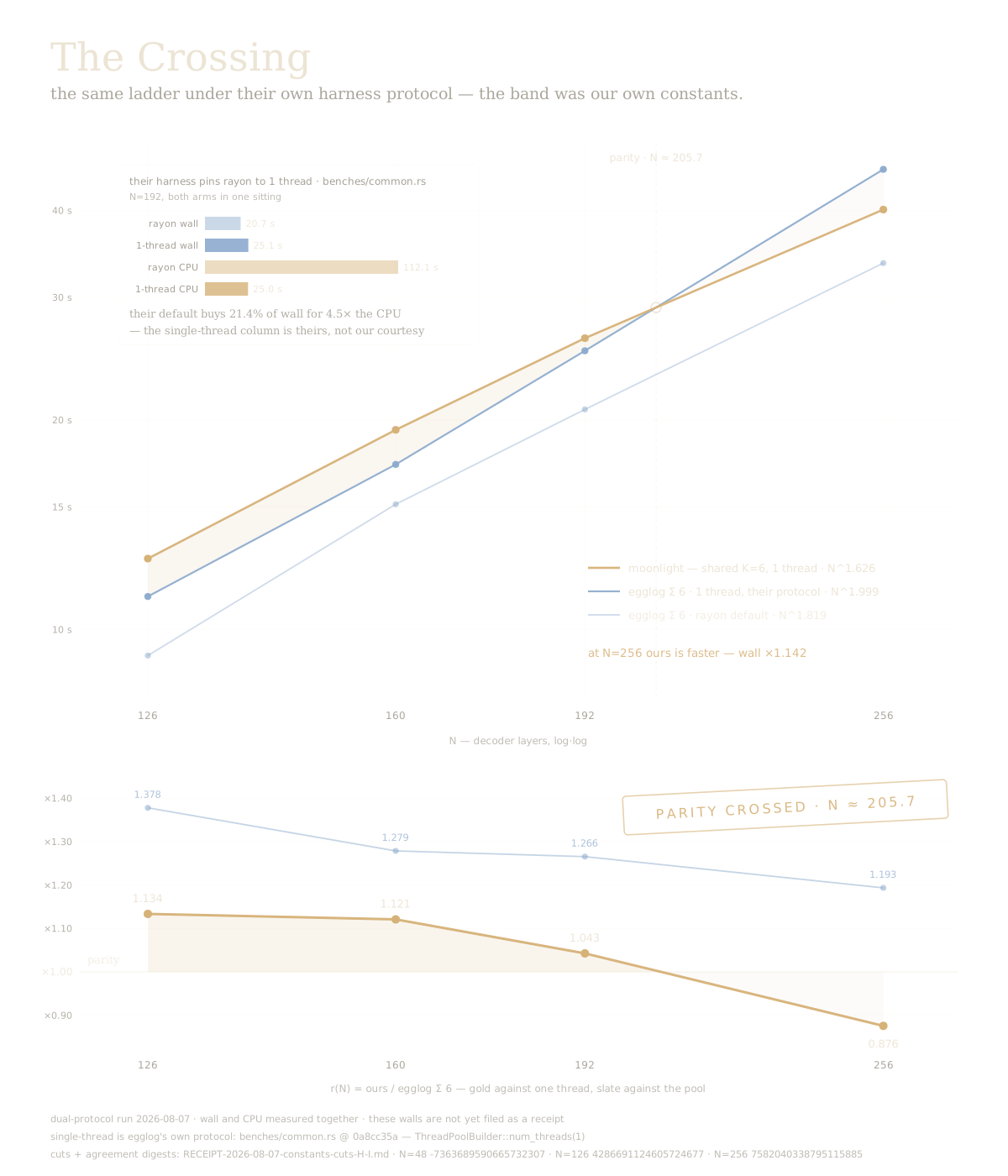
Then the band turned out to be two things wearing one coat. Two cuts landed the same night — a per-key membership fold replacing a whole-index key materialisation, and one filtered pass replacing a rescan of every variant row per representative — and our wall at N=126 fell from 26.859 s to 12.65 s with every digest unchanged. The rest was a protocol mistake, and it was ours. egglog's own harness pins rayon to a single thread; the first plate scored their pool-default number instead — their best wall, but not the protocol they publish. Measured at N=192, that pool buys 21.4% of wall for 4.5× the CPU.
So the ladder was run again under both protocols. The moat is a sliver that closes, and past N ≈ 205.7 it opens on the other side: at N=256 we are the faster engine on their own published terms, by ×1.142 on wall. These walls are not yet filed as a receipt, and the plate says so along its base.
Three curves: ours in gold, their published single-thread protocol in slate, their rayon default in the faint line below — kept because it is their best wall and they are entitled to it. The pale lobe past the crossing is the interval where we are the faster engine; at N=256, ×0.876. The crossing is interpolated between measured rungs by the driver, not drawn by hand, and the inset prices what the pool actually costs to run.